
The Future of Gambling That Never Quite Arrived
Traditional sportsbooks absorbed esports betting, and a standalone consumer platform backed by Entain shut down after heavy write-downs.

VR casinos. Skill-based slots. Esports. NFTs. ESPN BET. Gambling has spent the past decade chasing the next big thing. Here is what happened to some of the biggest ones.
In 2016, Caesars put videogames on the casino floor. Danger Arena looked more like an arcade shooter than a slot machine. Players shot monsters on a screen, and skill affected the outcome.
The idea was to solve a problem casinos had been worrying about for years: younger visitors did not seem particularly interested in slots. Give gambling a little more Call of Duty, the thinking went, and millennials might start playing.
Caesars installed more than 20 GameCo machines at its Atlantic City properties. About six months later, they were gone.
The games attracted younger players, but they did not generate enough gambling revenue to justify keeping them on the floor.
That same pattern appears in quite a few of gambling’s supposed next big things. Over the past decade, operators and suppliers have backed skill-based slots, virtual reality, esports, blockchain casinos, NFTs, the metaverse, media-branded sportsbooks and microbetting.
Most were based on something real, and most did not disappear completely. They simply ended up playing a much smaller role than people once expected.
The Slot Machine for Millennials
Skill-based gaming is probably the cleanest example because it got much further than a conference presentation or prototype. Regulators approved it, specialist suppliers raised money, major casino operators installed the machines, and customers could actually play them.
The theory made sense. Traditional slots give the player almost no influence over the result. Videogames are built around the opposite idea: if you get better at the game, you should perform better.
GameCo, Gamblit and others tried to combine the two. There were shooting games, racing games and other machines designed to feel more familiar to customers who had grown up playing consoles rather than slot machines.
Getting younger people to notice was not necessarily the problem. Caesars said customers aged 21 to 39 were significantly more likely to play its skill-based games than conventional slots.
The problem was getting them to spend enough money.
When Caesars removed GameCo’s early Atlantic City machines, reports at the time pointed to revenues that were too low to justify the vendor costs. The machines continued elsewhere, but the large-scale rollout never followed.
By 2021, Gamblit had stopped producing land-based gaming machines and shifted its attention toward online content.
In hindsight, casinos may have been right that younger visitors were less interested in traditional slots. Where the argument became less convincing was the assumption that making slots more like videogames would necessarily solve that problem.
There is also a basic tension between the two products. A videogame trains you to expect skill to improve your results, while a casino game still has to retain a house edge.
You can therefore play the skill part well and still lose money. Mathematically that is entirely normal for gambling, but it is not how most people experience videogames.
Everyone Was Going to Gamble in Virtual Reality
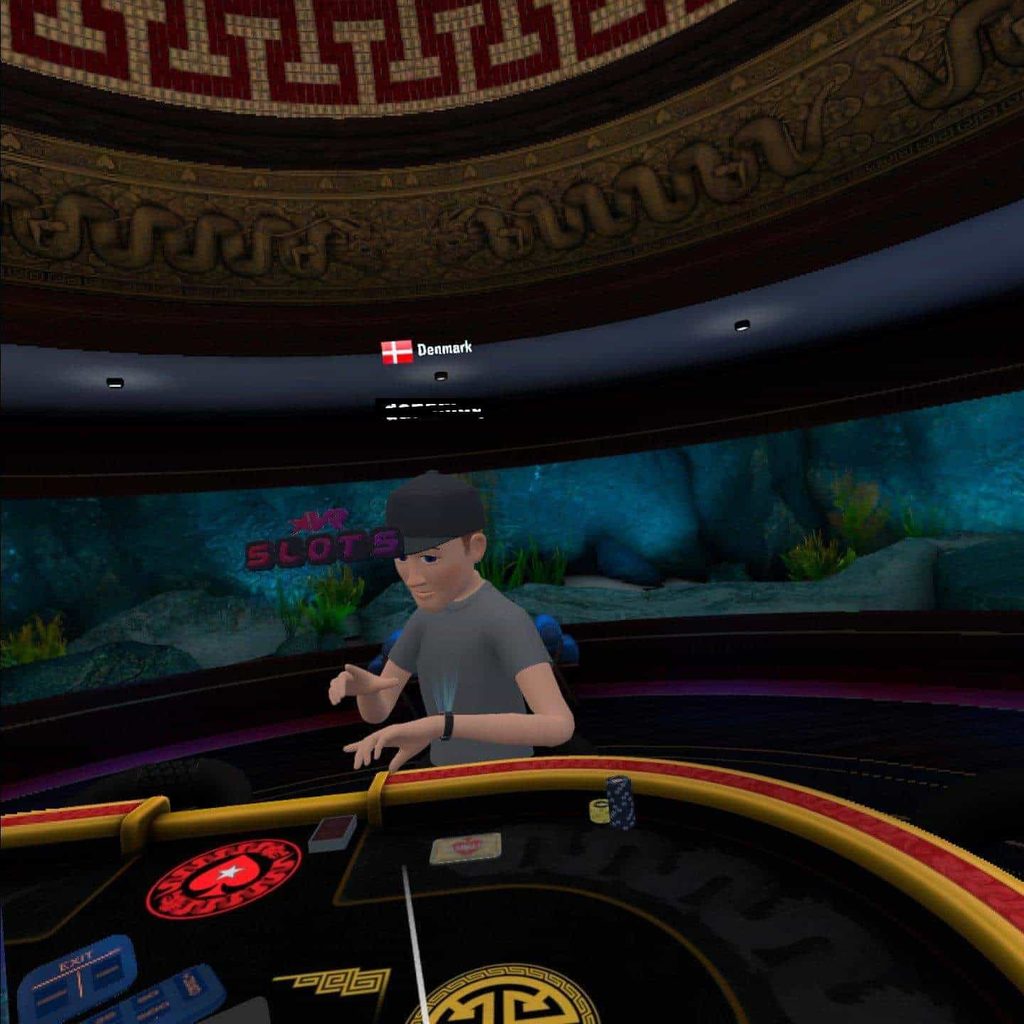
Virtual reality had a different problem: the product could actually be impressive.
In 2015, online casino SlotsMillion showed off a real-money VR casino built for the Oculus Rift. Players could enter a virtual casino inside a skyscraper, walk around and choose games from the casino floor.
At the time, VR seemed ready for a breakthrough. Facebook had bought Oculus for around $2 billion, HTC was preparing the Vive, and PlayStation VR followed.
It was easy to imagine online casinos moving in the same direction. Why scroll through a grid of roulette and slot games when you could walk around a casino instead?
The practical problems became clearer once people actually had to use it.
A few years later, SlotsMillion co-founder Alexandre Tomic spoke publicly about the difficulties. There were not enough high-end headsets, many users needed expensive computers, and players had to understand VR in the first place. Then, from that relatively small group, the operator still needed to find people interested in real-money gambling.
By 2018, VR was no longer SlotsMillion’s main focus. The idea never entirely disappeared, and Entain was still experimenting with VR and immersive gambling concepts during the later metaverse boom.
But online gambling itself was becoming much simpler.
Open the app, log in and play. A phone was already doing most of what an online casino needed it to do.
VR went the other way. It introduced extra hardware and extra steps at a time when the rest of online gambling was steadily removing them.
For a certain type of player, the immersive experience may have been interesting. It just never became a strong enough reason for large numbers of people to choose VR over the casino already sitting in their pocket.
The Metaverse Was Slightly Different
A few years later, many of the same ideas returned under another name.
This time it was the metaverse. Virtual land could be bought, people had avatars, digital goods could be traded, and naturally somebody built casinos.
Decentral Games became one of the better-known gambling businesses inside Decentraland, including its ICE Poker venues.
The obvious conclusion today is that metaverse gambling failed because people did not want virtual casinos. But the data makes that a little too simple.
Researchers examining hundreds of millions of Decentraland location records found that two ICE Poker casinos accounted for roughly a third of daily unique visitors during the period studied, despite occupying less than 0.1% of the virtual world’s map.
What is interesting is that people who were already in Decentraland actually used them.
The harder part was getting enough people into Decentraland in the first place.
The prediction that people might gamble in virtual worlds was therefore not particularly absurd. Gambling appears to have been one of the more popular things to do once people were there.
What never arrived at the expected scale was the much bigger audience for the virtual worlds themselves. Without that, even a relatively successful casino inside one of them was always going to remain small.
Esports Became Part of the Sportsbook
$23 billion
Esports betting forecast for 2020
Eilers Research’s 2015 projection of wagering scale by 2020.
$250 million
Esports betting estimate for 2015
The starting point Eilers Research used for its forecast.
Article reporting; Eilers Research
Esports is harder to call a failure. People absolutely bet on esports, bookmakers price Counter-Strike and League of Legends, and there are specialist data companies, integrity services, traders and professional bettors.
What changed was the scale of the original story.
In 2015, Eilers Research estimated that around $250 million would be wagered on esports that year and suggested the number could exceed $23 billion by 2020.
At the time, that did not look impossible. Competitive gaming had a huge young audience, fans were already watching online, they were comfortable with digital payments and virtual items, and major events were filling arenas.
Traditional sportsbooks added esports markets, but dedicated esports bookmakers also emerged. The assumption was that this audience might want a betting product built specifically for them.
Entain tested that idea. It acquired Unikrn, an established esports betting brand, and relaunched it as a consumer product. Then it closed Unikrn’s B2C operation in 2023.
Entain wrote down tens of millions of pounds connected with the business and said it would instead develop esports products through its existing betting brands.
Esports betting is still very much around. What seems to have faded is the idea that esports bettors needed a completely separate bookmaker built around them.
Someone who wants to bet on Counter-Strike can do it through the same account used for football, tennis or basketball. For most customers, that is probably enough.
NFTs Were Going to Bring Ownership Into Gambling
NFTs had a much faster rise and fall.
DraftKings launched its NFT Marketplace in 2021, and the early response was real. Its first 70 NFT drops were oversubscribed by an average of 14 times, while Marketplace recorded more than 120,000 primary and secondary transactions and over $20 million in gross merchandise value during the third quarter of 2021.
More than a third of Marketplace users were new to DraftKings. This was not a case where nobody showed up.
DraftKings pushed further.
Reignmakers combined digital collectibles with fantasy-style gaming. Customers could own player NFTs, trade them and use them in contests.
Then, in July 2024, DraftKings shut Reignmakers and its NFT Marketplace.
There were legal complications, including litigation over whether some NFTs might constitute unregistered securities, so it would be too simple to say the products closed solely because people lost interest.
But there is a more basic question: what did the blockchain eventually make better?
Fantasy competitions do not need NFTs. A betting company can create digital collectibles without NFTs, and customers can receive rewards, hold virtual items and trade assets within a controlled marketplace without putting them on a blockchain.
Once the excitement faded, NFTs had to compete with much simpler systems that already did most of what gambling companies wanted.
Crypto Did Find a Gambling Market
Cryptocurrency belongs in a different category. It would be wrong to say crypto gambling never arrived.
It very much did.
Crypto solves one of gambling’s most obvious practical problems: moving money. It can be fast, it can cross borders, and it can work where cards or bank transfers do not.
That has also made cryptocurrency particularly useful in offshore and unregulated gambling.
Research from the Asian Racing Federation’s Council on Anti-illegal Betting & Related Financial Crime has tracked growing cryptocurrency use among betting sites operating outside local licensing regimes. At its 2026 Asian Racing Conference, researchers said crypto acceptance among the illegal betting sites they were monitoring had risen sharply compared with earlier years.
That is a rather different outcome from some of the early blockchain-casino pitches, which focused heavily on transparency, trust and decentralization.
Crypto clearly found a use in gambling. One of its strongest practical advantages turned out to be much more straightforward: it makes money easier to move when conventional payment methods are difficult or unavailable.
That usefulness has been particularly visible in parts of the market that regulated operators may not have had in mind when blockchain casinos were being promoted.
The $150 Million-a-Year Shortcut
The most expensive gambling hype cycle of the last few years did not involve headsets, tokens or blockchains.
It involved sports media.
After regulated U.S. sports betting started spreading in 2018, sportsbooks faced a simple problem: they needed customers. Sports media companies already had millions of them.
The connection looked obvious. FOX had a huge sports audience, so FOX Bet appeared. Fubo streamed sports, so it built Fubo Sportsbook. PENN bought Barstool Sports.
Then PENN went much bigger and launched ESPN BET.
Fubo tried to put the sportsbook next to the game
Fubo’s idea was particularly logical. People were already using the service to watch live sports. Why make them leave to place a bet?
Fubo Sportsbook launched in 2021 with the aim of integrating viewing and betting into the same ecosystem. Less than a year later, the company was reviewing the future of the business.
In October 2022, it shut the sportsbook down. Fubo later recorded $87.4 million in impairment charges connected with its wagering segment.
FOX Bet lasted longer, but it also closed in 2023.
None of that means sports media has little value to a sportsbook. Quite the opposite: operators still spend heavily on advertising, sponsorships, broadcasters, podcasts and personalities.
The harder part was turning an existing media audience into customers of a particular betting product.
Then came PENN.
Barstool, then ESPN
PENN first went after a very particular type of sports audience.
Barstool Sports had younger users, strong personalities and a culture that already overlapped heavily with gambling. PENN bought an initial 36% stake for around $163 million in 2020 and later acquired the rest of the company.
Barstool Sportsbook became central to its U.S. betting strategy.
Then PENN changed direction.
It sold Barstool back to founder Dave Portnoy for nominal consideration and moved on to one of the biggest names in American sport: ESPN.
PENN’s accounts later recorded a $923.2 million pre-tax loss on the disposal of Barstool.
That figure includes acquisition accounting and should not be treated as a simple measure of how much Barstool Sportsbook itself lost. It does, however, show how significant the change in strategy was.
ESPN BET looked like a much stronger proposition.
If there was one sports-media brand capable of moving Americans into a sportsbook, ESPN seemed like a good candidate.
In August 2023, PENN signed a deal to use the ESPN BET name. The agreement called for PENN to pay ESPN $150 million a year, alongside warrants, and was initially designed as a ten-year relationship.
ESPN BET launched in November 2023.
In November 2025, PENN and ESPN announced that the arrangement would end. PENN moved its sportsbook back under theScore Bet name and subsequently recorded an $825 million non-cash impairment in its Interactive business as part of its strategic reset.
Again, that does not mean ESPN BET alone lost $825 million.
But after Barstool and ESPN, PENN had spent several years testing whether a powerful sports-media brand could make the difference in a crowded U.S. sportsbook market.
The results suggest the relationship is more complicated.
A sports fan can use ESPN every day without wanting to move a betting account from FanDuel or DraftKings. Once someone is actually using a sportsbook, pricing, promotions, market depth, app performance, payment methods and familiarity all start to matter.
A strong media brand can clearly help with awareness. It is less clear how much that matters once the customer has downloaded the app and started comparing the actual product.
ESPN did not abandon sports betting either. After ESPN BET ended, it moved into a promotional and odds relationship with DraftKings.
So the connection between sports media and betting remains. What looks less certain is whether the media company or media brand itself needs to become the sportsbook.
When a New Category Becomes a Feature
Microbetting may be heading toward a similar outcome.
The concept is simple: instead of betting on whether a team wins the game, bet on what happens next.
Will the next baseball pitch be a strike? Will the next football play be a run or a pass? Will the next possession produce points?
When Joey Levy and Jake Paul launched Betr in 2022, microbetting was not just another product. It was the idea behind the company.
Betr said it believed microbetting would eventually become the predominant way Americans bet on sports.
Two years later, the company launched a rebuilt sportsbook. Its own announcement said the new platform would move Betr “far beyond microbetting.”
It added moneylines, spreads, totals, player props, futures, parlays and the other products customers expect from a sportsbook.
Microbetting itself did not disappear. DraftKings bought Simplebet, the specialist microbetting company co-founded by Levy, in a deal ultimately valued at roughly $135 million including contingent consideration.
That suggests the underlying product has value. It just increasingly looks like something that can sit comfortably inside a conventional sportsbook rather than a reason to build an entirely new one.
Esports ended up in a similar place.
Several of gambling’s supposed new categories seem to follow this path. The original idea survives, but eventually becomes one more part of a much broader product.
The Changes That Actually Stuck
There is an obvious problem with looking back at failed predictions. Search through enough old press releases and almost any industry starts to look foolish.
Gambling also made some enormous technology bets that were right.
Online gambling worked. Mobile worked. In-play betting worked. Live casino worked.
Compared with VR casinos or blockchain worlds, none sounds particularly exciting today. Their success has made them ordinary.
But they have something important in common.
They did not ask customers to become completely different people.
Mobile betting took something customers already did and put it in their pockets. In-play betting let someone already watching a match continue betting after it started. Live casino took roulette, blackjack and baccarat and made familiar casino tables accessible from home.
They removed friction or gave an existing customer more of something they already wanted.
The ideas that struggled generally asked for a bigger behavioral change. Skill-based slots needed videogamers to become casino players. VR needed gamblers to put on headsets. The metaverse needed people to spend significant amounts of time inside virtual worlds. NFTs needed customers to care that their digital collectibles existed on a blockchain. Media sportsbooks needed viewers to turn brand loyalty into betting-account loyalty.
None of those ideas was impossible. They simply depended on customers changing more of their existing habits.
That appears to be a much harder thing to predict.
And Now Everyone Is Talking About Prediction Markets
Which brings us to the current next big thing: prediction markets.
By 2026, they are already too large to dismiss as another passing fad. DraftKings has entered the market, FanDuel has entered, and Betr has expanded into it.
Companies including Kalshi and Polymarket have turned event contracts into mainstream financial and political products, while sports markets have pushed the category closer to conventional betting.
The attraction for gambling companies is obvious. Prediction markets potentially allow businesses to offer sports-related contracts under a federal commodities framework, including in places where conventional online sports betting is restricted.
That has also created the biggest question around the category.
States argue that many sports contracts are simply sports bets by another name and should fall under state gambling laws. Prediction-market companies and the Commodity Futures Trading Commission argue that qualifying contracts fall under federal commodities law.
By 2026, that argument is being fought in courts across the country.
Meanwhile, customers are using the products. DraftKings has said its prediction-market business has grown faster than expected, while FanDuel has continued expanding its own offering.
It is too early to know where this ends.
Prediction markets may become a major new part of U.S. gambling. They could also end up looking more familiar over time, with sports event contracts becoming another product available alongside conventional betting.
Looking back at the other examples, the interesting question is probably not whether prediction markets technically work. Clearly they do.
It is whether they give customers something sufficiently different or useful to change how they already bet.
That question has turned out to matter far more than how futuristic a new gambling product looked when it first appeared.